
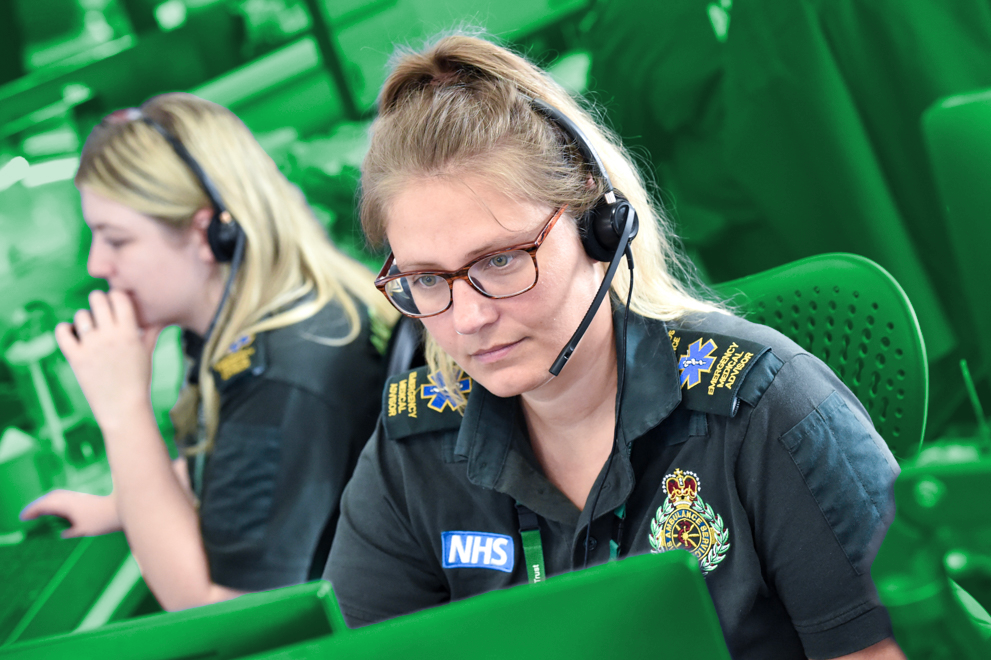
The world has changed - and so has the ambulance service
Many of our buildings were designed and built in the 1970s for an ambulance service that was very different from the one we have today.
As demand has grown, our buildings have come under increasing pressure.
Some of our buildings are now full, ageing and increasingly difficult to maintain.
Our staff tell us these environments can make it harder to work efficiently and provide the best possible service.
We are investing in hundreds more frontline colleagues and new vehicles, so we need facilities that support today’s ambulance service and tomorrow’s growth - that’s why we’re modernising our buildings and facilities.
Our 10 year plan
We will steadily move to a 'hub' estate model - recognised nationally as best practice and already used successfully by a number of ambulance trusts.
What will change
- We'll have a smaller number of larger, modern hubs with improved support, education and wellbeing facilities for our staff.
- Make Ready teams will improve efficiency, meaning emergency crews can get on the road sooner, creating more time for patient care.
- Some unfit for purpose ambulance stations will close and be relocated - but ambulance services will not reduce or change.
- The new Hubs will be supported by existing ambulance stations, which we continue to invest in, and local deployment points and the way we operate means ambulances will remain in the communities they serve.
What won't change
Our ambulances aren't usually dispatched from stations - they are most often dispatched from a hospital, the roadside, or their previous patient's location.
With our new buildings, there will be no change to the way we respond to patients, or how patients receive care. The nearest available ambulance will still be sent to patients who need us.
- Everyone who needs an emergency response will continue to receive one.
- Emergency response arrangements won’t change.
- The nearest available ambulance will still be sent to a patient in need.
- We will still invest in other existing stations.
What this means for our staff and communities
By making these improvements we’re investing in our staff, our communities and the future of emergency care across the East Midlands.

More time caring for patients
Dedicated teams at our hubs will help frontline crews spend less time on non-clinical tasks, and more time responding to patients.

Better facilities, training and support for our colleagues
Modern facilities will improve staff experience. Training and education spaces will improve knowledge and patient care.

Room to grow our service
We're recruiting hundreds of additional staff to meet rising demand and improve experience for our patients. Our current stations don't have enough space for our new larger workforce.

Improved sustainability
Modern, energy efficient facilities will support our environmental ambitions, including electric vehicle charging and NHS net-zero goals.
How modern buildings will support our ambulance service
Our service is growing to meet the need of our communities.
As our workforce grows, and we continue to increase the size of our fleet of ambulances, we need more room for our staff and vehicles.
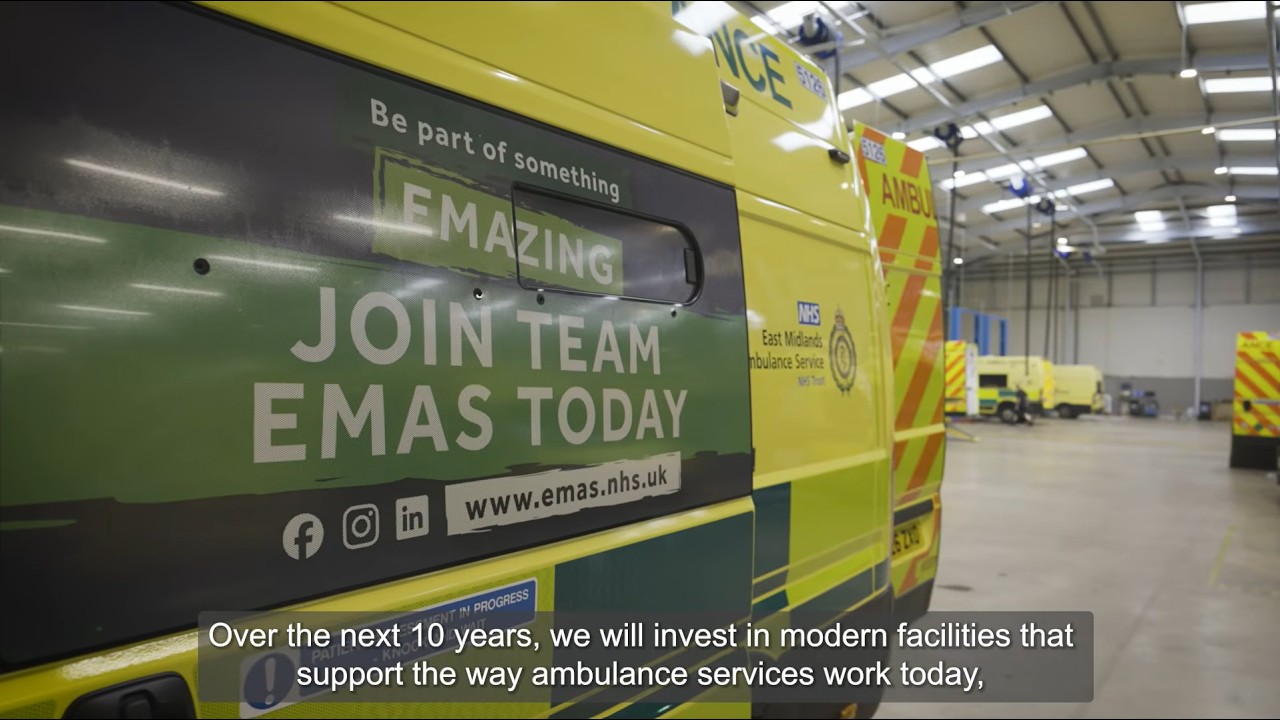
Watch our video about how the ambulance service operates, the challenges we face, and how our 10 year plan helps us meet them.
Our timeline
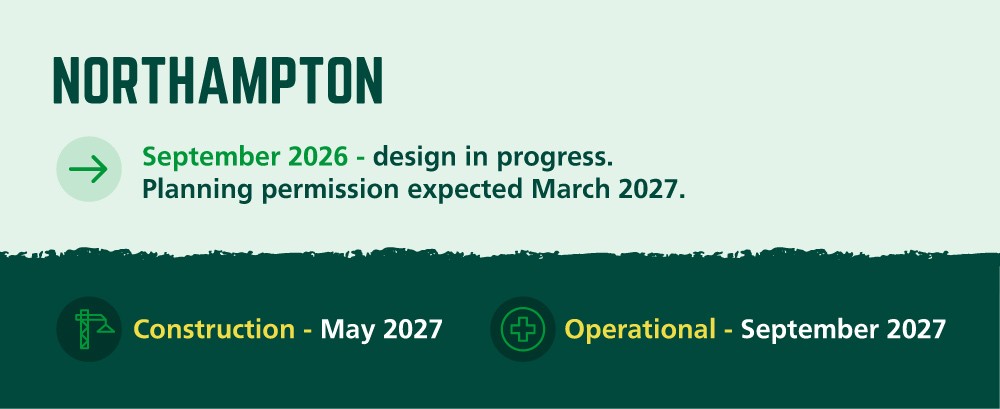
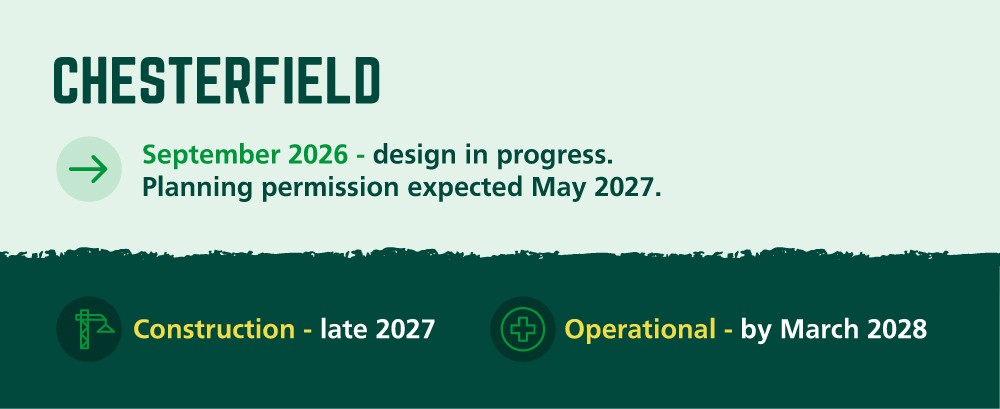
The first hubs will be developed at a former commercial unit in Northampton, and at a building on the Chesterfield Royal Hospital site in Derbyshire.
The existing Northampton North and Mereway ambulance stations will be consolidated into the new Northampton hub.
The existing Chesterfield, Eckington and Heath ambulance stations will be consolidated into the Chesterfield hub.
As the sites are developed, we will work with staff and partners, and use national best practice to make the spaces fit for the future.
Got a question or comment?
Email communications@emas.nhs.uk
Frequently asked questions
A hub model is an operating approach where a smaller number of larger, modern operational ‘hubs’ support a wider network of local response locations.
The model aims to make the best use of people, vehicles and buildings. It does this by providing improved facilities for wellbeing and training, allowing closer collaboration between teams, reducing vehicle preparation time through ‘Make Ready’ processes and enabling more efficient use of resources.
Hubs will give us the room we need to grow our service, recruiting hundreds of additional staff and adding new vehicles to our fleet.
The hub approach is used across the NHS and is widely recognised as best practice. It has already been successfully implemented by several other UK ambulance trusts.
Yes. There will be no reduction in ambulance service provision – and EMAS is recruiting hundreds more frontline staff and investing in 40 new, additional ambulances. Everyone who needs an emergency response will continue to receive one.
EMAS already positions ambulances according to real-time patient need and the nearest available crew is dispatched to respond to an emergency.
The changes EMAS is making are designed with patients in mind, helping to increase our workforce and fleet, meet growing demand and continue providing high-quality care now and into the future.
A key focus of this programme is about giving our staff the facilities and support they deserve and need to do their jobs to the best of their ability. Better welfare areas, training facilities, collaboration space and improved vehicle readiness will create a better working environment, support wellbeing and learning, and help keep more ambulances available for frontline care. Ultimately, that's good for both staff and patients.
The way we respond to emergencies will not change. The nearest available ambulance will continue to be sent based on patient need and demand, just as it is today.
We are growing our frontline teams to build resilience and help to meet response targets. Our response times are steadily improving and we expect that progress to continue.
Modernising our estate – alongside other improvement work under way at EMAS - will give us further opportunities to improve our efficiency and performance.
While some unfit-for-purpose stations will close and relocate to a new hub, we will continue to invest in other existing stations to support future growth and demand. We've already secured investment to improve Buxton Ambulance Service in Derbyshire and Beechdale Ambulance Station in Nottinghamshire, for example.
Importantly, ambulance services are not being reduced. EMAS is seeing increasing call volumes, growing patient complexity and more care being delivered in community settings. At the same time, many of our existing and ageing buildings were designed for a very different ambulance service model and are no longer suited to the way we need to operate today.
With plans to recruit hundreds more frontline staff and 40 new, additional ambulances over the next few years, EMAS has simply outgrown many existing buildings. We need new ones that provide the capacity and facilities we need to continue providing high-quality care to patients.
This programme is focused on ensuring EMAS estate can support the ambulance service of today and tomorrow.
Hub models have already been successfully implemented by several other UK ambulance trusts and reflect recognised NHS best practice. The model aims to make the best use of people, vehicles and buildings. It does this by providing improved facilities for staff wellbeing and training, allowing closer collaboration between teams, reducing vehicle preparation time through ‘Make Ready’ processes and enabling more efficient and sustainable use of resources. Together, these changes help to keep more frontline crews available and maximise the time they spend delivering patient care.
No. There will be no reduction in ambulance service provision. We are growing our frontline workforce and ambulance fleet, not reducing them.
More than half of ambulance responses are made by crews already working in local communities, rather than setting off from an ambulance station.
That means they respond immediately after finishing a previous job, often from the road or hospital, rather than from a single ambulance station - and that will stay the same.
Modernising EMAS’s estate is a long-term programme that will be delivered in phases over the next 10 years, and decisions about where and when new hubs are developed are influenced by several factors. A key consideration is when funding becomes available and when suitable sites present the right opportunity for development. These opportunities do not all arise at the same time, so EMAS needs to be ready to act when they do.
Hub sites in Northampton and Chesterfield have been identified and, subject to planning permission being secured, we will be working with design and building contractors to develop the locations to suit our needs.
No. EMAS is investing in our frontline services by recruiting hundreds more staff and purchasing additional ambulances, as well as investing in our estate so it is fit for the future. While modern facilities can and will deliver efficiencies, the primary purpose is to improve support for EMAS staff, keep more crews available for patients, grow our capacity to house staff and vehicles, and continue delivering high-quality care for communities.