
While patients may never meet the people working in EMAS’s two Emergency Operations Centres (EOCs), their decisions help ensure the right care reaches the right people at the right time.
At this year’s EOC Long Service Awards, colleagues were recognised for a combined approximate 600 years of service to EMAS and the wider NHS.
Held at Kelham Hall in Nottinghamshire, the event celebrated individual achievements and highlighted the important role EOC colleagues play in supporting patients across the East Midlands.
Awards were presented by Simon Tomlinson, Assistant Director of Operations (EOC); Ben Evans, Director of Service Delivery; Alison Crowe, Senior Manager for Patient and Staff Safety; and Gary Lockley, Head of EOC.
The people behind the care
Reflecting on more than four decades in the ambulance service, Simon Tomlinson spoke about how emergency operations have changed over the years. He said:
“The way we work today is almost unrecognisable from when I started 41 years ago.
“Technology, systems and specialist teams have transformed what we do, but one thing has never changed.
“The passion, commitment and dedication of EOC colleagues to do the very best for patients remains just as strong today as it was when I first joined the ambulance service.”
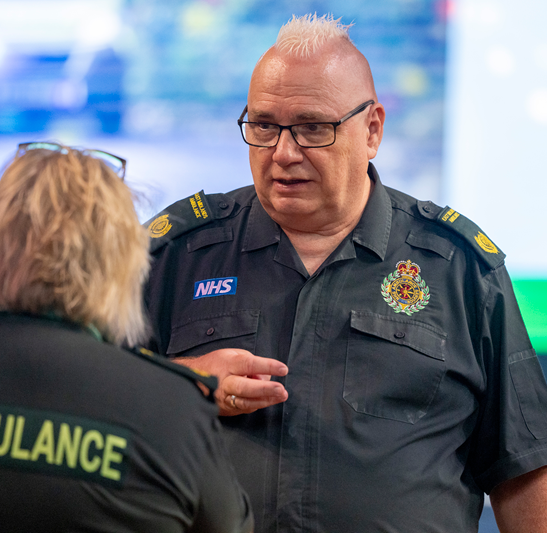
Having recently joined EMAS, Ben Evans said it was the people who had made the strongest impression on him. He said:
“What has stood out to me most is the pride people have in the work they do and the difference they make for patients.
“Today we’ve celebrated colleagues who have dedicated decades of their lives to the ambulance service, supported one another through change and consistently gone above and beyond to help the communities we serve.”
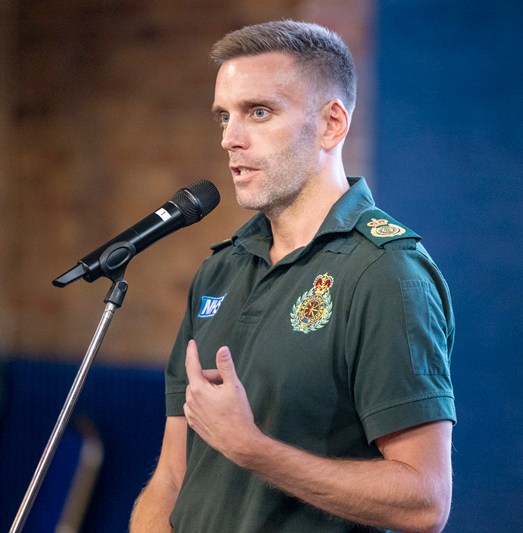
He also thanked the families, friends, and loved ones who support our staff, adding:
“Working in the ambulance service can be more than just a job.
“The support people receive at home plays a huge part in helping them do what they do and today is also an opportunity to recognise and thank those people.”
Award recipients
While not all recipients could attend the event in person, those recognised as part of the event included:
10 years
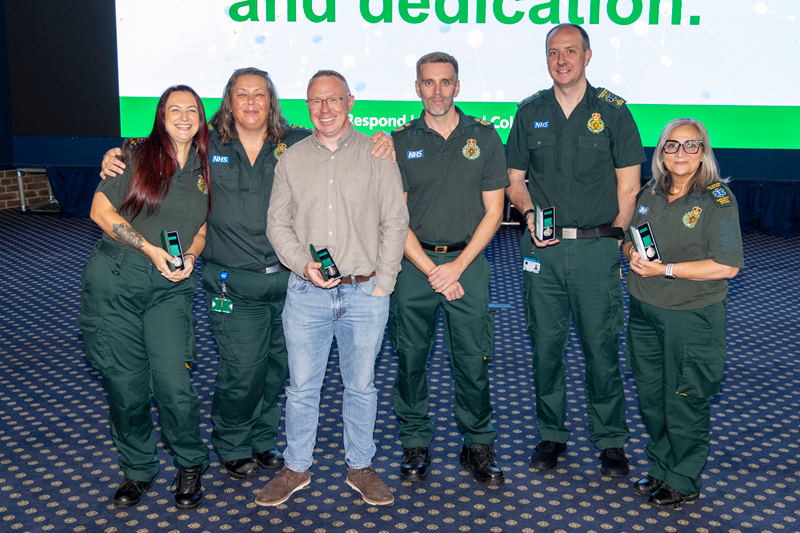
- Angela Collett
- Colette Storr
- Dawn Jackson
- Fiona Bayley
- Luke Kireia
- Michael Scudder
- Naomi Arnold
- Sammi Hetherington
20 years
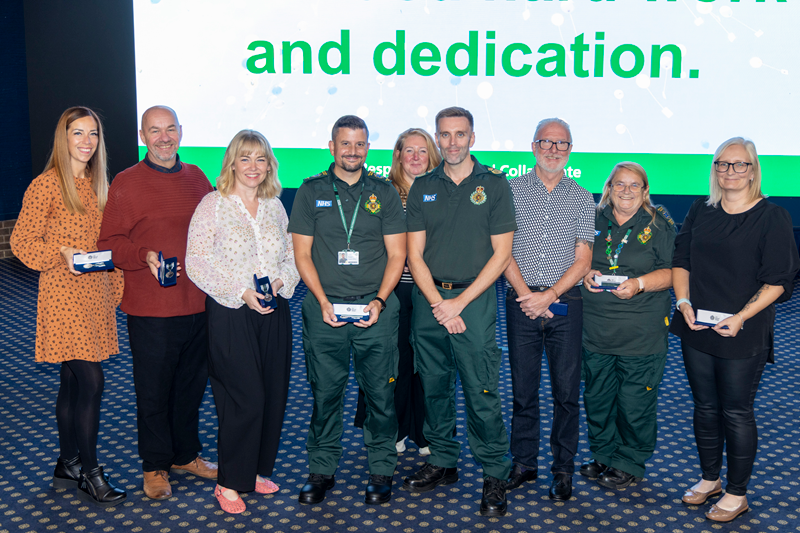
- Alan Beardsley
- Andrea Yarrow
- Dave Pemberton
- Claire Seabridge
- Debbie Curtis
- Donna Clay
- Donna Maxwell
- Jeff Wheat
- Julie Cullis
- Justine Costerd
- Kelly Evans
- Mandy Bestwick
- Richard Skelton
- Stuart Arden
- Judith Gray
- Emma Binch
- Craig Scott
30 years
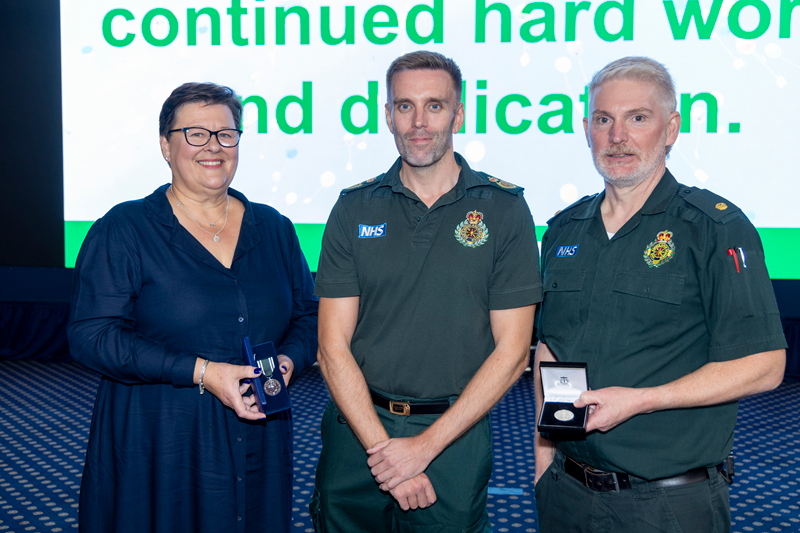
- Mandy Pritchett
- Michael Collins
- Samantha Moodley
40 years
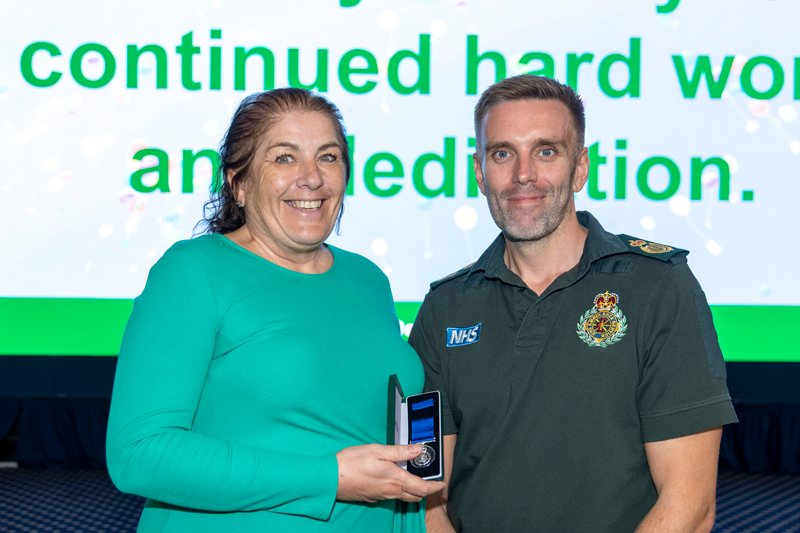
- Graeme Wallace
- Paula Burbidge
Retirees
- Sue Fereday
EMAS values awards
The event also recognised colleagues who consistently demonstrate EMAS’s values of Respect, Integrity, Contribution, Teamwork and Compassion.
Their contributions help support colleagues, strengthen teams and enable EMAS to deliver the best possible service for patients:
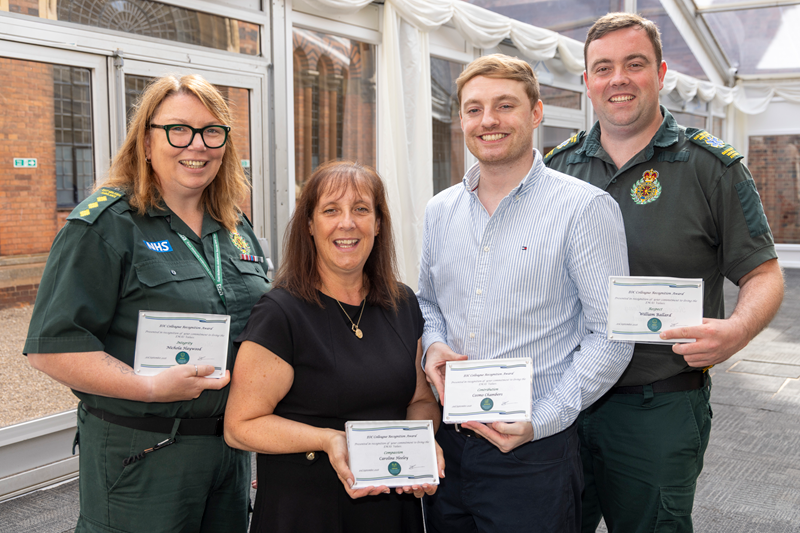
- Caroline Heeley
- Nichola Haywood
- Cosmo Chambers
- Will Ballard
- Sarah Hughes
Internal Excellence awards
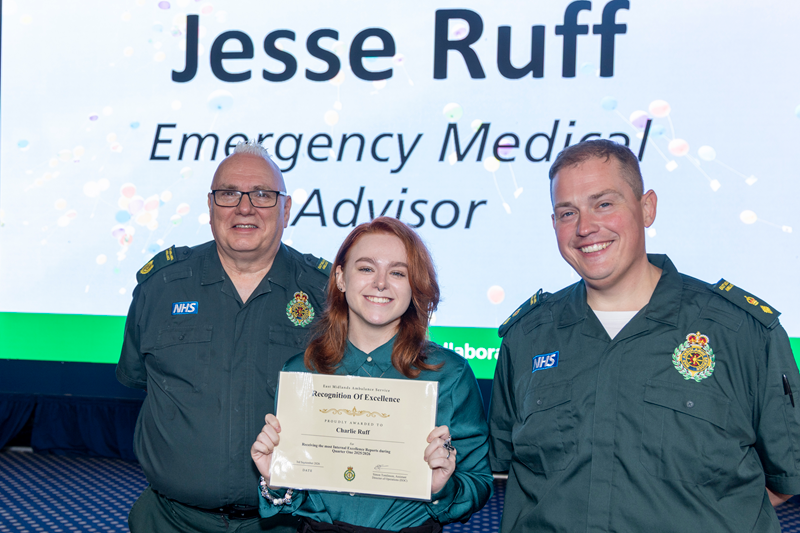
Internal Excellence reports gives colleagues the opportunity to recognise and thank one another for going above and beyond.
The following colleagues received the highest number of reports, reflecting the appreciation they have earned from colleagues across EMAS:
- Jesse Ruff
- Rachel Johnson
- Tony Warsop
- Bailey Bowles
- Caroline Abrams
- Chloe Irving
- Clare Haywood
- Emme Khalid
- Hannah Oxby
- Hayley Butler
- Kim Reed
- Lauren Way
- Lucy Davidson
- Mandy Davies
- Tim Higham-Jones
- Jordanna Rossin
- Luke Stevenson
- Tim Harrigan
- Davey Downes
- Matthew Lewis
Staff stories
We spoke two colleagues who, throughout their careers, have been supporting patients, colleagues, and communities across our region.
Debbie Curtis: still loving the challenge after 20 years
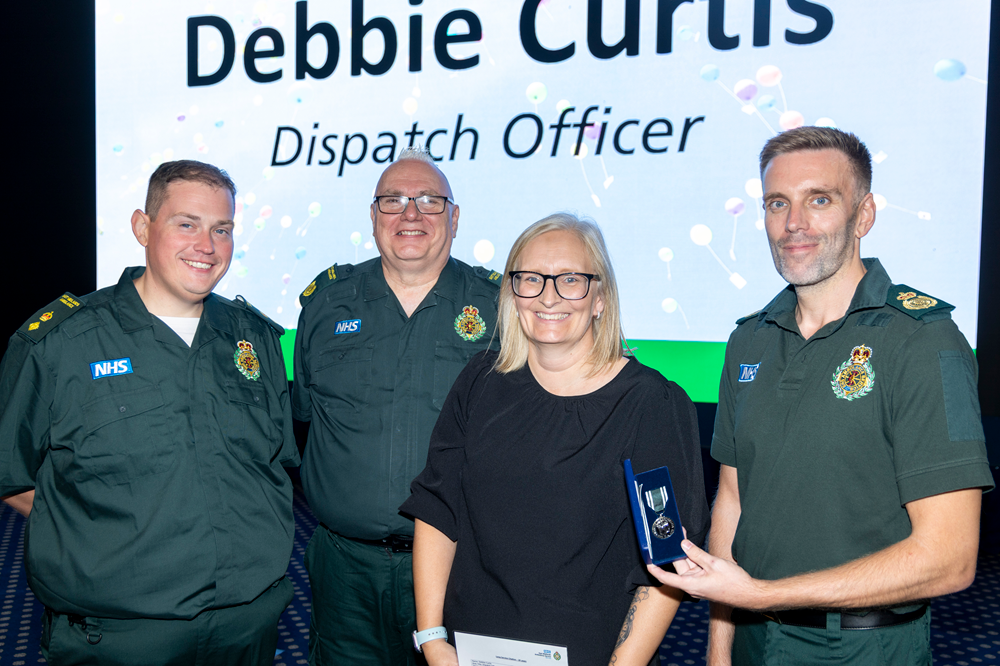
Debbie Curtis was recognised for two decades of service.
As a dispatch officer, Debbie helps coordinate ambulance responses. She considers the needs of patients, the location and availability of crews, and what support may be required at scene.
After 20 years in the role, Debbie still values its variety and sense of purpose:
“Every patient and every situation is different. The person waiting for help may be having one of the worst days of their life, and our role is to make that day a little better by getting the right care to them as quickly as we can.
“You are constantly weighing up different factors and thinking ahead. It can feel like a game of chess because every decision affects what happens next.”
Debbie has also learned the importance of knowing the communities covered by EMAS and maintaining good communication with ambulance crews. That experience helps dispatch officers build a clear picture of what is happening across an area and respond as circumstances change:
“You learn by taking in everything happening around you. You remember what worked well, learn from what did not, and draw on the experience of other dispatchers.
“Communication is so important. Strong teams understand how each other works, trust one another and can have honest, respectful conversations about how best to support patients and crews.”
Those working relationships have become an important part of Debbie’s life. Some began when she first joined EMAS at 29:
“Some of us started off as call takers (known today as Emergency Medical Advisors) and have worked alongside each other for 20 years. We have seen one another grow, both professionally and personally.
“I have had amazing support throughout my career. I still love my job, and joining EMAS is something I have never regretted.”
Luke Kireia: passing knowledge forward
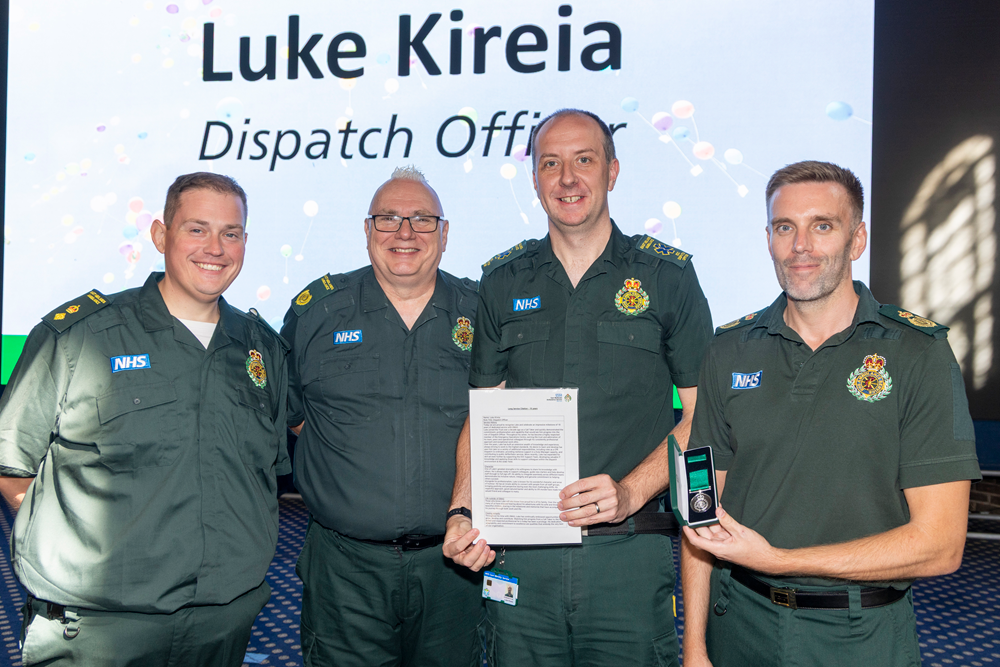
Luke Kireia was recognised for 10 years of service.
He joined EMAS as an Emergency Medical Advisor (EMA), answering 999 calls and gathering the information needed to understand what help a patient requires. He later became a dispatch officer, helping coordinate the ambulance response once the call had been assessed.
During his career, luke has also supported community first responder (CFR) coordination, public access defibrillator services, duty management and EOC systems. Each opportunity has helped him understand another part of the patient’s journey:
“Learning about different areas has given me a much broader view of how EMAS works.
“Even though we all do different things and face different pressures, we share the same goal. We want to improve the response, support our crews, and help get to patients as quickly as possible.”
One of Luke’s greatest strengths is his willingness to share what he has learned. He helps new colleagues develop their skills and remembers how important patience and encouragement were when he was beginning his own career:
“Everyone starts without knowing all the answers. When I joined, people looked after me and took the time to mentor me.
“When somebody new arrives, I try to remember how I felt in their position. I want to be patient, answer their questions, and share the knowledge that will help them become confident in their role.”
Luke also helped implement video triage used by some EMAS clinicians. With a caller’s consent, a link can be sent to their phone, allowing clinicians in the control room to see what is happening at the scene and gather additional detail to support their assessment of a patient:
“Seeing how things work behind the scenes has made me a better dispatcher. It has also shown me how technology can support colleagues and give them crucial information when they are helping a patient.
“I still love coming to work. It is a good job, and I feel that I can make a difference.”