
“Apps like Uber make arranging and dispatching vehicles look simple.
“The reality in the ambulance service is far more complex, as we must match patients' clinical and mobility needs with the right vehicle and crew.”
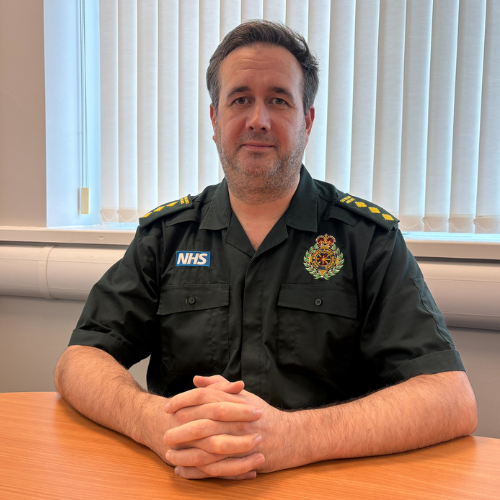
Michael Hanley works within our Non-Emergency Patient Transport Service (NEPTS), a mission-critical link without which some patients would not be able to access the NHS.
Patients eligible to use the service often have medical needs, such as mobility impairments, that make travelling by car or public transport challenging.
In 2025/2026 alone, the service’s control room took 224,669 calls from NHS colleagues and patients booking or amending journeys, averaging 615 calls a day.
A former taxi dispatcher, Michael has spent the past decade with NEPTS, progressing from Dispatcher and now as a Service Support Manager, and is all too familiar with the service’s dynamic nature.
Michael is one of a number of people sharing their stories this International Control Room Week, which runs from 26 October to 1 November, to raise awareness of the often-unseen work of our control room staff.
He said: “Behind every patient journey is a coordinated effort involving dispatchers, resourcing teams, control room managers, fleet colleagues and frontline crews all working together to match resource with demand in real time.
“People generally don't realise just how many people are working behind the scenes to keep services running.”
He added: “If you’re not used to the control room environment, there can be a lot of pressure. It takes a certain type of person to manage that pressure.
“You need to remain calm and collected and be able to analyse situations objectively and focus on facts, even when you’re presented with difficult problems.
“You’re often dealing with people who may already be worried or stressed, so being able to support them while making the right operational decisions is really important.”
One of the control room’s biggest challenges is responding to unpredictable same-day bookings and hospital discharges, which can increase demand at very short notice.
Despite those pressures, Michael says the role brings a strong sense of purpose and he praised International Control Room Week for shining a spotlight on the vital work carried out by control room colleagues.
He added: “Working in the Non-Emergency Patient Transport Service control room gives me a real sense of satisfaction. At the end of the day, I know I’ve worked hard and done a good job.”