
When someone calls 999, an Emergency Medical Advisor asks questions to understand what has happened.
For some calls, the next step is clear. Others are more complex and benefit from further assessment by an experienced clinician in our Clinical Hub, which includes nurses, paramedics, and mental health practitioners.
They give advice to help people safely manage at home or refer patients to appropriate community or specialist NHS services. An emergency ambulance remains an option when that is needed.
Our Hub supports around 20,000 patients this way, every month. We’ve continued to invest in our clinical workforce. Last year, more than 50 additional clinicians joined the team.
Clinical Advisor nurse Ann Langrick speaks directly with patients, bringing her clinical expertise to the conversation while working with them to agree what happens next.
As we mark International Control Room Week (26 October to 1 November 2026), Ann takes you behind the scenes of this vital element of modern ambulance care.
She said: “My priority is always my patient. As a registered nurse, I’m their advocate.
“For me, it’s about listening to the person, understanding what they need and working together on a plan for their care.”
Bringing a career of experience to every conversation
Before joining the Clinical Hub, Ann built up her nursing experience from across the NHS, supporting patients at different stages of their care.
Ann explained: “Having worked across different parts of healthcare, I understand what different services can offer.
“That can help me look beyond the immediate concern and consider what is going to be most helpful for that patient – whether that’s an ambulance, advice they can follow safely at home or help from another NHS service.”
One experience from earlier in her nursing career has stayed with her. A patient had been advised to attend hospital but was reluctant to go.
Rather than simply repeating that advice, Ann took time to understand what was concerning them. She explained why further care was important and talked through what going to hospital would involve.
She said: “Giving somebody clinical advice is only one part of caring for them. You also have to understand what might be stopping them from following it.
“If you know what they’re worried about, you can have a conversation about it and help them feel more confident about getting the care they need.”
Finding the next step
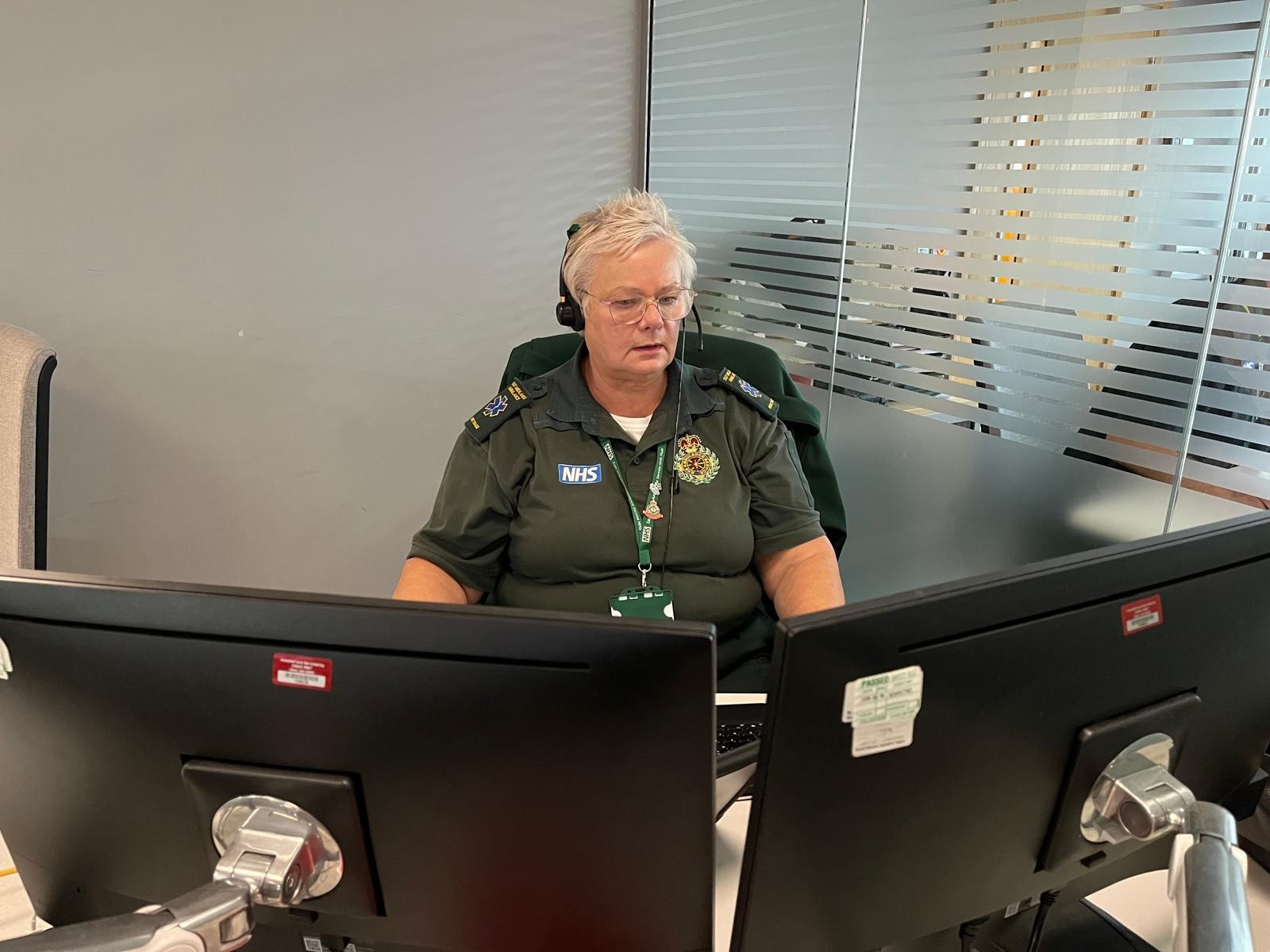 During a recent shift, Ann spoke with a patient whose situation needed further assessment. Building on information gathered during the initial 999 call, Ann explored their current concerns and circumstances.
Together, they agreed what should happen next. A more appropriate healthcare provider was asked to follow up with them, and Ann made sure the patient knew when they should call 999 again if their condition changed.
During the same shift, Ann spoke with another patient who needed more help for them to explain what was happening.
She adapted the conversation, asking questions in different ways. She also gave the patient time to explain their concerns. Further support was arranged through the patient’s GP, with advice on when they may need to call 999 again.
For Ann, how that conversation happens matters:
“You have to communicate in a way that works for the person you’re speaking to. It isn’t just about asking questions.
“You need to listen and show an interest in what they are telling you. That helps build the relationship you need to work together on what happens next.”
Helping people reach appropriate care helps keep emergency ambulances available for life-threatening situations, such as when someone is unconscious, not breathing or having a stroke.
This International Control Room Week, we’re shining a light on clinicians like Ann. Their contribution may be less visible than an ambulance arriving with blue lights, but it’s an important part of caring for people who call 999.